





















The CMS Physician Fee Schedule 2025: How to Adjust for Operational and Financial Success
Look for new billing codes, changes to payment systems, and strategies to help medical professionals succeed as you review the CMS Physician Fee Schedule 2025.

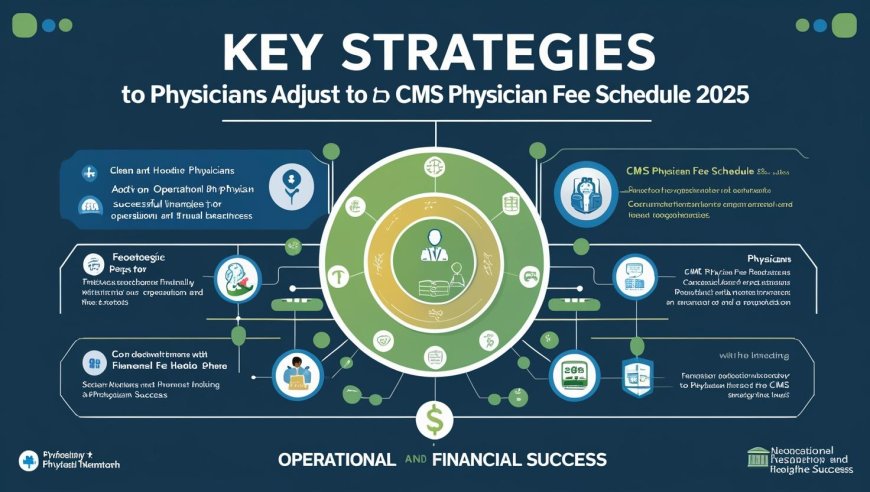
Physician reimbursement is no longer subject to passive adjustment. Among the fundamental changes to the CMS Physician Fee Schedule 2025 are minor revisions to payment codes. The purpose of this regulatory turning point is to hasten the industry's transition to value-driven models. Every element now contributes to a larger CMS goal, whether it be how doctors report quality, participate in incentive programs, or even organize their patient contacts.
These adjustments are essential for any provider hoping to continue operating under Medicare's supervision. The goal of deciphering this complicated update is to protect the sustainability of healthcare delivery in a fast-changing paradigm, not only to ensure compliance.
Value-Based Care Transition and ACO Involvement
The shift to value-based care is accelerating, with almost half of Traditional Medicare beneficiaries now receiving care through Accountable Care Organizations (ACOs). CMS aims to have all beneficiaries participating in responsible care relationships by 2030. This change highlights the significance of:
-
Assessing the methods of present practice.
-
Taking ACO involvement into consideration.
-
Investigating mergers or strategic alliances for smaller practices.
-
Evaluating the level of preparedness for value-based care approaches.
Program for Prepaid Shared Savings
CMS launches a "prepaid shared savings" scheme for doctors in ACOs beginning in January 2026. Important elements consist of:
-
Quarterly advance payments for investments in strategic practices.
-
50% of the money will go toward providing direct patient care.
-
Remaining money for personnel and infrastructure.
Physicians must:
-
Carefully consider your investing strategy.
-
Recognize your payback responsibilities.
-
To guarantee ROI, put risk management procedures into action.
Expanded Billable Services
The 2025 Fee Schedule creates additional income sources by broadening the scope of chargeable services:
-
Interventions for safety planning.
-
Follow-up treatment after discharge.
-
Virtual arrivals.
-
Advanced management of primary care.
To take advantage of these chances, procedures ought to:
-
Completely update the billing systems.
-
Spend money on training employees on new codes.
-
Adjust processes to make room for additional services.
Improvements to Quality Reporting
A notable advancement in quality reporting is the switch to the APP Plus Quality Measure Set, which will be implemented gradually between 2025 and 2028:
-
Stressing the use of electronic reporting.
-
Extended rewards for the adoption of eCQM through 2025.
Physicians need to:
-
Invest in enhanced EHR capabilities.
-
Train staff for new reporting requirements.
-
Modify workflows to capture necessary data.
Health Equity Benchmark Adjustment (HEBA)
HEBA offers the following chances for practices that assist marginalized communities:
-
Practices may be eligible for upward benchmark adjustments if at least 15% of their patients are dual-eligible or receive Medicare Part D low-income subsidies.
Among the prerequisites are:
-
Evaluating the demographics of patients.
-
Spending money on training in cultural competence.
-
Improving the resources available for care coordination.
Advanced Primary Care Management
CMS suggests a new Advanced Primary Care Management (APCM) service code and payment:
-
Incorporates components of current care management services.
-
Intends to enhance the coordination and quality of primary care.
-
Promotes the transition of practices to value-based care.
Specialty Care Model Advancements
CMS is investigating the use of MIPS Value Pathways in a specialist care model:
-
Enhances the involvement of specialists in value-based care.
-
Suggests new payment methods and classification for services related to cardiovascular risk assessment and management.
Health Risk Assessments (HRAs)
Health Risk Assessments are essential for determining risk factors and directing preventive measures.
-
Within 90 days after enrolling in Medicare, CMS pays for the first health evaluations.
-
Medicare Advantage programs and Medicare Annual Wellness Visits both depend on HRAs.
Advantages consist of:
-
Early identification of any health hazards.
-
Plans for individualized care.
-
Lowering costs by providing preventative care.
-
Increased involvement of patients.
Managing Persivia CareSpace's 2025 Fee Schedule
A comprehensive healthcare solution driven by AI is provided by Persivia's CareSpace platform to handle the intricacies of the 2025 Fee Schedule:
-
Analytics of patient records in real time.
-
Automated monitoring of quality metrics.
-
Smooth submission of the eCQM.
-
Clinical and financial insights powered by AI.
CareSpace gives practitioners the ability to:
-
Effectively oversee the prepaid shared savings scheme.
-
Make the most use of the resources available.
-
Track the effectiveness of value-based care.
-
Determine and monitor patients who qualify for HEBA.
-
Show your influence on marginalized communities.
Bottom Line
Static techniques will no longer support clinical or financial outcomes in the era that healthcare organizations are approaching. From infrastructure planning to patient engagement tactics and billing practices, the CMS Physician Fee Schedule 2025 necessitates change on all fronts. This is not a short-term fix, but a complete reset. Today's proactive providers will be in a better position to optimize their payments, maintain compliance, and provide their patients with higher-value treatment.