





















Network Security Certifications: What You Need to Know - IIFIS
Learn about the best network security certifications, including IIFIS and CompTIA Security+ to advance your career and protect networks from cyber threats.

There is a greater need than ever for experts who can safeguard vital data and networks due to the ongoing increase in cyberattacks and data breaches. IT workers can demonstrate their knowledge and preparedness to handle today's security threats by earning network security certifications. We'll go over the many network security certifications that are available, their requirements, and how to choose the best one for you.
What is Network Security?
Network security refers to the protection of computer networks from various threats, such as unauthorized access, cyberattacks, data breaches, and malware. It involves the implementation of various tools, policies, and practices to prevent cybercriminals from exploiting vulnerabilities within a network. In simple terms, network security is the safeguard that ensures that an organizations data and systems are protected from potential threats.
Why Do You Need Network Security Certifications?
Getting certified in network security is a terrific way to stand out in a competitive job market, whether you want to progress in your current position or are thinking about a career in IT security. The following justifies the significance of certifications:
-
Expand Job Opportunities: Because certified applicants exhibit a certain level of skill and dedication to the industry, many employers favor them.
-
Verify Your Knowledge and Skills: Certifications offer an organized method of verifying your knowledge and abilities, making sure you are prepared to tackle network security issues.
-
Increased Salary Potential: Because certified experts have specific knowledge and abilities in managing important network security jobs, they frequently command higher compensation.
-
Maintain Current Knowledge of Industry Trends: To obtain network security certifications, professionals must maintain current knowledge of the newest techniques, technologies, and dangers in the field.
-
Professional Development: Possessing certificates will help you get into more senior network security positions like cybersecurity manager or security architect.
Top Network Security Certifications to Consider
Numerous network security certificates are available, each suited to a particular set of competencies, occupations, and areas of interest. Some of the best network security certifications that can advance your career are listed below:
1. IIFIS Network Security Certification
Another great accreditation for professionals wishing to improve their network security knowledge and abilities is the IIFIS certification. A variety of subjects are covered in the program, such as threat analysis, risk management, security procedures, and ethical hacking.
Why IIFIS?
-
IIFIS offers a thorough approach to network security by fusing strategic insights with technological know-how.
-
Because of its established reputation in the business, the certification is perfect for people hoping to pursue a global career.
2. CompTIA Security+
One of the most well-liked entry-level certifications for network security specialists is CompTIA Security+. Network security, cryptography, access control, risk management, and incident response are just a few of the many security subjects it covers.
Why Security+?
-
For people who are unfamiliar with cybersecurity or network security, it's perfect.
-
Globally recognized, Security+ is frequently needed for many entry-level IT positions.
3. Certified Information Systems Security Professional (CISSP)
One advanced-level certification that focuses on security management is the CISSP, which is provided by (ISC). It is intended for seasoned professionals who want to focus on network security and have a strong foundation in IT security.
Why CISSP?
-
Within the cybersecurity industry, it is regarded as one of the most esteemed qualifications.
-
The CISSP certification is widely accepted and shows that you can plan, carry out, and oversee an extensive cybersecurity program.
4. Certified Ethical Hacker (CEH)
The EC-Council's Certified Ethical Hacker (CEH) certification is intended for professionals who wish to hone their expertise in locating and fixing network vulnerabilities. It emphasizes security auditing, hacking methods, and penetration testing.
Why CEH?
-
For anyone who is interested in penetration testing and ethical hacking, it is ideal.
-
The certification shows proficiency in spotting vulnerabilities before malevolent hackers may take advantage of them.
5. Cisco Certified Network Associate (CCNA) Security
For people who deal with Cisco systems, the CCNA Security certification is a great option. Cisco is a leader in network infrastructure and security. Cisco network security, comprising firewall, VPN, and intrusion prevention system configuration, is the main focus of this certification.
Why CCNA Security?
-
For people who work with Cisco networking equipment, it is quite valuable.
-
The certification is perfect for network administrators and engineers because it covers extensive topics like threat detection and network security procedures.
6. Certified Information Security Manager (CISM)
ISACA's CISM program is designed for professionals who are interested in administering and supervising security programs. The CISM certification is very helpful for network security administrators who have to create and maintain security plans, even though it isn't technically a "technical" one.
Why CISM?
-
Professionals in managerial or strategic jobs are strongly encouraged to take it.
-
Candidates who complete the certification program will be equipped to lead security initiatives throughout a company thanks to its emphasis on governance, risk management, and incident response.
How to Choose the Right Network Security Certification
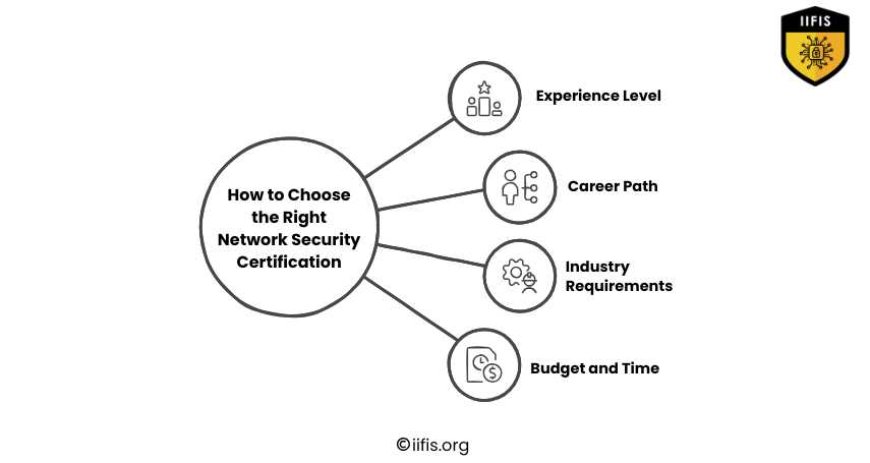
Your professional objectives, degree of experience, and interests will all play a role in selecting the best certification. When making your choice, take into account the following factors:
-
Experience Level: CompTIA Security+ or CCNA Security certifications are excellent if you're just starting out. Certifications like CISSP or CISM are more appropriate for positions that require more experience.
-
Career Path: Think about the network security domain you wish to focus on. For example, CEH might be the greatest option if ethical hacking is your area of interest. A Cisco certification might be better suited if network administration is your primary focus.
-
Industry Requirements: Certain industries have particular certification requirements. The financial industry, for instance, would place more value on qualifications like CISM, but tech firms might prioritize cloud security certifications like CCSP.
-
Budget and Time: The price of network security certifications and the length of time needed for preparation vary. Before committing to a certification, be careful to take your savings and study time into account.
In order to validate your skills, expand your employment options, and make sure you are ready for the constantly changing cybersecurity risks, network security certifications are crucial. Everybody can choose a certification path, regardless of whether they are just starting out or want to progress in their job. In the subject of network security, you can improve your credibility and position yourself for long-term success by selecting the appropriate certification, such as IIFIS, CompTIA Security+, CISSP, or CEH.