



















Know the General Misconceptions about Knee Replacement Surgery
Many people fear knee replacement surgery due to common misconceptions, such as extreme pain, long recovery, or limited mobility post-surgery. In reality, modern techniques make the procedure safer, recovery quicker, and results more effective. Understanding the facts can help patients make informed decisions about their joint health.
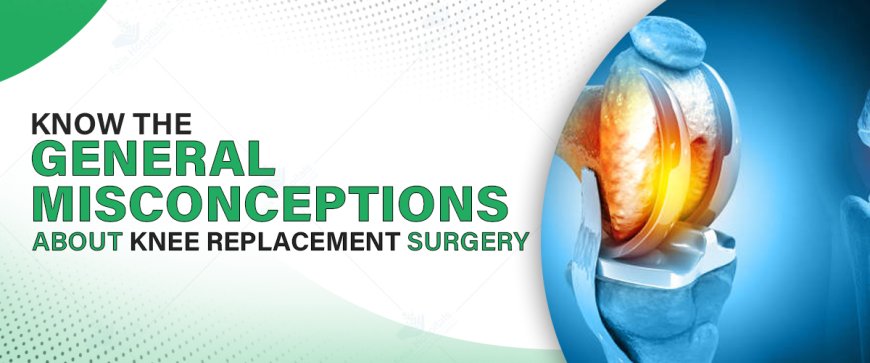
Knee replacement surgery or knee arthroplasty is a surgical operation in which the damaged or diseased knee joint is replaced with a synthetic joint or prosthesis. It is widely known to cure long-term knee pain and increase mobility. With its 95% success rate, it dramatically improves the quality of life of patients at the best orthopedic hospital in Noida. While these benefits exist, most people are discouraged from undergoing knee replacement surgery due to myths. Let the experts prove them wrong!
9 Knee replacement surgery myths
Below is a closer look at some of the myths and the facts that lie behind them:
Myth 1: The success rate of knee replacement surgery is low.
Fact: In comparison to this, knee replacement is a highly successful operation. Studies and patient history have proven that a success rate of approximately 95% has been consistently achieved. Most patients feel great pain relief and improvement in function, enabling them to perform routine activities easily.
Myth 2: You are not allowed to bend your knee or sit on the floor after the operation.
Fact: How much the knee will bend after surgery will depend on a number of factors, including the operation that has been performed, the quality of the prosthesis, and attendance at post-operative rehabilitation by the patient. Nearly all implants today will be capable of full movement, like the natural knee, as long as they are of high quality.
Myth 3: If the operation fails, it cannot be repaired.
Fact: When complications arise or the implant fails with time, a repeat procedure known as revision surgery becomes necessary. Revision surgery corrects the issues of the initial procedure and restores function and comfort.
Myth 4: Knee replacements last for 10 years.
Fact: Advances in surgical technique and implant material have significantly extended the lifespan of a knee replacement. In the majority of cases, the prosthesis has a shelf life of 20 years or more, and in some instances, a lifetimeif patients follow the right guidelines for maintenance.
Myth 5: Recovery from knee replacement takes a long time.
Fact: Post-op recovery times can be extremely variable based on individual health and compliance with post-op rehabilitation, but the risks are highest in the first few weeks and most individuals are able to get back to normal daily activities within 4 to 6 weeks. Mobilization and guided exercises based upon a predetermined calendar are critical for the rapid recovery of knee replacement surgery in Noida.
Myth 6: It is not possible to operate on both knees simultaneously.
Fact: Replacing both knees at once during one operationbilateral knee replacementis an option and advantage for some patients. One hospital stay and rehabilitation at the same time is simpler and less expensive for appropriate recipients.
Myth 7: A person can't drive after knee replacement.
Fact: Most patients can drive after 68 weeks if they have recovered adequate strength and mobility in the operated limb. Always clear any return to driving with your surgeon.
Myth 8: Age prevents qualification for knee replacement.
Fact: There is no upper limit to getting a knee replacement. It is actual. The majority of patients having knee replacements are in their 60s, 70s, or even older..Age is irrelevant; what matters are your overall health and the degree of joint degeneration.
Myth 9: The body accepts the prosthetic knee because it is treated like a foreign body.
Fact: Biocompatible material is incorporated into the fashioning of knee implants that will operate securely in the body. The materials, like some metals and plastics, are inert and won't induce any adverse reaction or rejection.
Myth 10: Physiotherapy is indispensable, and one has to spend a long time recovering.
Fact: Most patients manage well by adhering to their hospital surgical team's prescribed exercise routine. With discipline and effective guidance, most of the patients recover mobility and walk on their own within weeks.
Make an appointment today with orthopedic surgeons and take your first sure step toward a healthy, mobile life.
Conclusion
Knee replacement is a groundbreaking surgery that has restored millions of people's mobility and allowed them to lead pain-free lives. But myths deter people from getting treated at the appropriate time. With knowledge of facts and shattering the myths, you can make bolder, wiser decision-making choices for your well-being. Whether worried about age, rehabilitation, or long-term success, recallknee replacement is safer, more successful, and more affordable than ever.
If you or a loved one are considering knee replacement, consult with a trusted orthopedic specialist. At Felix Hospital, one of the highest rated orthopedic hospitals, our experienced professionals deliver state-of-the-art surgical expertise, personalized rehabilitation plans, and compassionate care every step of the way. Don't let misconceptions keep you from a more active, pain-free lifestyle.
FAQs on Knee Replacement Surgery
Q: Is knee replacement worth it if I'm getting by on painkillers?
Ans:If painkillers are becoming a way of life, then it might be time to go in for surgery. Knee replacement addresses the root of the problem, not the symptom, with lasting relief and reducing the necessity for medication.
Q: What is the optimum age for a knee replacement? Am I too young or too old?
Ans:There is no "ideal" age. If pain from chronic conditions interrupts daily activities, limits movement, or keeps you from enjoying what you love, your age isn't the problemyour quality of life is the problem.
Q: Will I be able to kneel, sit cross-legged, or do yoga after surgery?
Ans:Although time is required for high-flexion activities, most patients attain an adequate range of motion to floor or knee sit. It is recovery, implant, and physiotherapy dependent. We will support you in achieving your recovery goals.
Q: How do I prepare my home for recovery from knee surgery?
Ans:Small changessuch as installing grab bars, using a raised toilet seat, and being able to reachcan make safety and recovery simpler. Our staff gives a detailed checklist at pre-surgery counseling.
Q: Can I still have knee surgery if I have diabetes or high blood pressure?
Ans:Yes, those patients with well-controlled hypertension or diabetes can usually get along just as well without a problem. Our preoperative evaluation ensures you are healthy enough for surgery, lessening any risk.
Q: When is it time for surgery?
Ans:If a couple of steps of walking exhaust you, stairs hurt, or even lying down does not provide you relief from painget seen by an orthopedic surgeon. We'll determine if surgery is an option for you at this time.
Source: https://www.felixhospital.com/blogs/know-the-general-misconceptions-about-knee-replacement-surgery